


Silicone elastomers play a significant and preferential role in laboratory applications because of their unique combination of physical, chemical, thermal, and biological properties. Where conventional rubber falls short, silicone offers the ability to resist degradation, maintain sealing performance and mechanical compliance across extreme temperature changes and aggressive chemical contact. Making silicone elastomers ideally suited for glassware connections, transfer and analytical systems, bioreactor and connective glassware interfaces, and closures used for the stoppering of flasks, bottles, and vials.
When short and long-term storage integrity of content is required, the pairing of silicone elastomers with high-purity borosilicate glass vials assures leak-tight performance even after autoclaving, repeated thermal cycles, and aggressive chemical contact.
What Are Silicone Elastomers?
Silicone elastomers are synthetic rubber-like materials made primarily from a backbone of silicone polymers and oxygen atoms with carbon and hydrogen side groups. Unlike natural rubbers or other synthetic elastomers, silicone elastomers are a hybrid material, also known as a siloxane, that gives them unusual stability. The silicon–oxygen bond is one of the strongest chemical bonds found in polymers, which helps resist breakdown when exposed to heat, UV radiation, or oxygen.
In addition to chemical stability, the large bond angles within the siloxane chain make the material extremely flexible at the molecular level. This compressive flexibility prevents brittleness at low temperatures and allows the elastomer to recover its shape after repeated compression or stretching. Because of this, silicone elastomers retain elasticity in extreme cold and maintain integrity at compressive forces including; application force (liner sealing), torque force (screw threaded sealing), and residual seal force (crimp sealing).
Finally, their non-polar, hydrophobic surface resists water absorption and swelling, while tailored side groups can be added to improve oil and chemical resistance.
These features allow silicone elastomers endure long-term mechanical, thermal, and environmental stress, making them common on lab glassware, including bioreactor and cap liners, vial septa and stoppers, stretch lids, sealing-rings for ground glass joints to support vacuum during vacuum and thermal cycles, crimpers, and roller racks.
Key Properties of Silicone Elastomers
The performance of silicone elastomers in the lab is defined by their standout characteristics:
- Thermal stability: They can operate in extreme temperatures, from as low as -60°C to as high as 230°C, without significant degradation.
- Chemical resistance: Resistant to water, oils, and many chemicals, they offer reliability in demanding environments.
- Electrical insulation: Their dielectric properties make them ideal for protecting sensitive electronic components.
- Flexibility and durability: Even after repeated compression, piercing, or bending, they retain their shape, resealability, and performance.
These properties make silicone elastomers one of the most reliable materials for long-term use in laboratory applications.
Silicone Elastomer Applications
In lab workflows, silicone elastomers interface with glassware in several areas:
| Glassware type | Typical silicone component(s) | Primary applications | Practical notes |
|---|---|---|---|
| Bottles & media storage | GL threaded caps with silicone or PTFE faced silicone liners; vented inserts with silicone membranes | Cell culture & bioprocessing; sample storage & transport; sterilization cycles | Use PTFE faced silicone when storing aggressive solvents; match liner durometer to sealing torque; validate autoclave or dry heat window. |
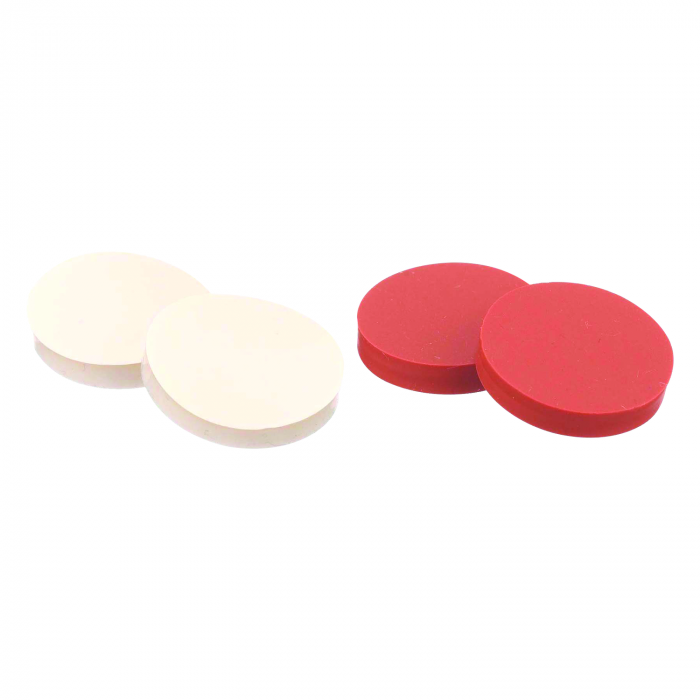
| Vials & chromatography | Silicone PTFE line septa for crimp and screw vials | Analytical chemistry separating components of a mixture; sample storage & transport | Choose septa formulated for low extractables; resealability supports multiple needle piercings without glass particulate. |
| Vials & Headspace Analysis | Silicone or butyl PTFE lined septa / stoppers for crimp and screw vials | Analyzing the vapor or "headspace" above a solid or liquid sample, commonly under higher pressures, to detect and quantify volatile compounds | Choose septa material (silicone, butyl) formulated based on extractable, resealability (multiple needle piercings without glass particulate), and permeability. |
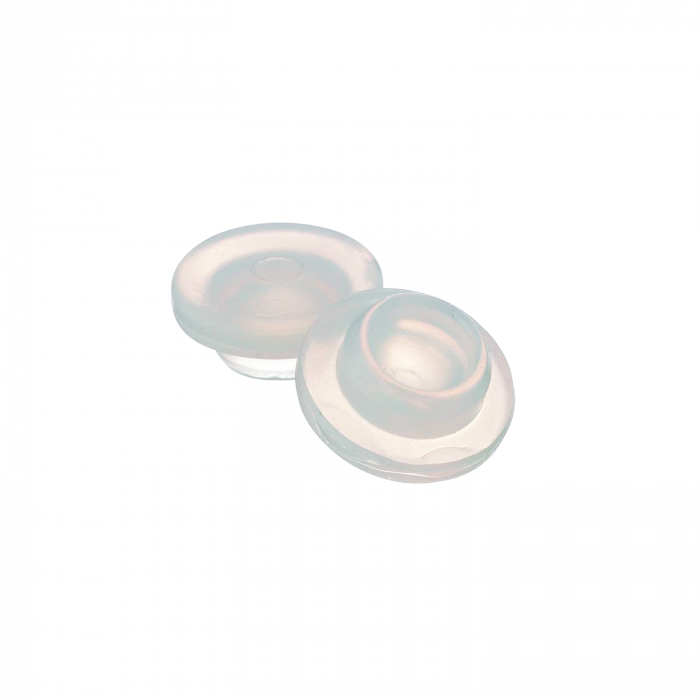
| Vials & Sample Storage | Silicone stoppers for crimp vials | Storage of chemicals, acids, and other corrosive content extracted view piercing. | Piercing stopper for crimp finish aluminum sealing increasing stopper to vial contact area compared to liners. |
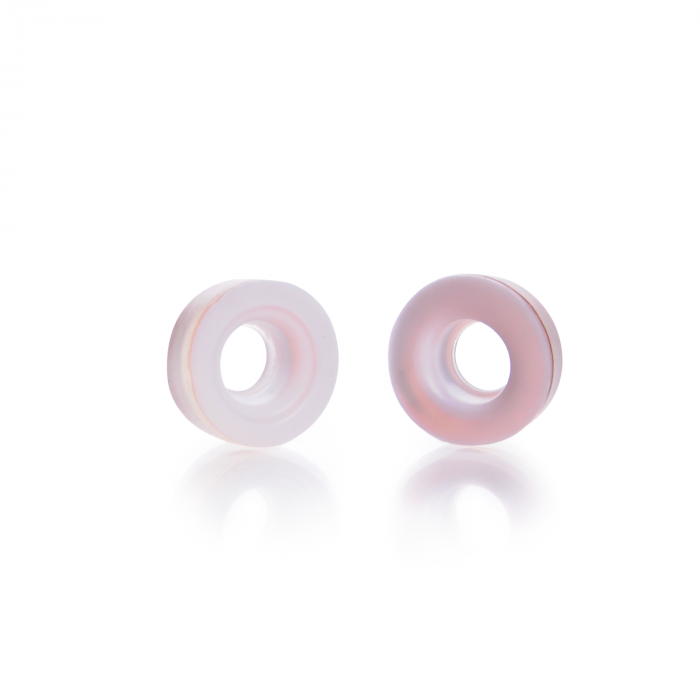
| Ground glass joints | Silicone sealing -rings and sleeves | High temperature workflows; vacuum and general synthesis assemblies | Sealing -rings can replace vacuum grease in many setups; select size/durometer to protect mating surfaces and maintain seal. |
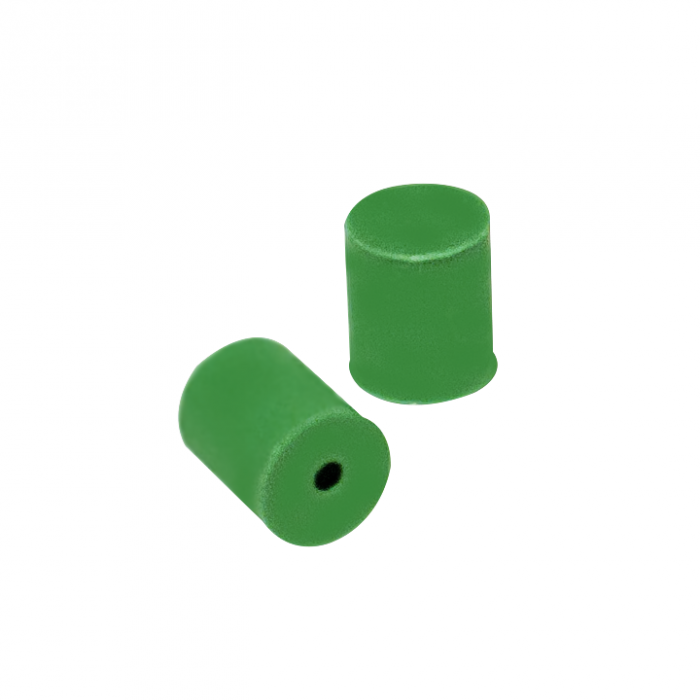
| Flasks | Reusable silicone stopper | Short holds and benchtop work; contamination and spill control; evaporation reduction | Steam autoclavable solid and center hole tops for flask stoppering. |
| Vacuum & desiccation | Silicone gaskets for desiccators and manifolds | Vacuum processes; drying and moisture control | Verify compression set over dwell time; confirm gasket integrity after repeated temperature cycles. |
Limitations of Silicone Elastomers
Like any material, silicone elastomers offer distinct benefits but also come with certain challenges:
- Chemical compatibility isn’t universal. PDMS-based silicone can swell markedly in certain organics (e.g., toluene, hexane), with swelling correlating to Hansen solubility parameters, so solvent exposure must be screened early.
- Acidic/harsh environments can accelerate aging. Field and lab studies show degradation and property drift for silicone in extremely acidic atmospheres or acidic media in the absence of a surface coating.
- Higher Gas Permeability. Oxygen and moisture ingress may limit long-term drug storage.
Understanding these factors helps laboratory users make informed decisions about where silicone elastomers deliver the most value. If you’re weighing these trade-offs, get in touch with DWK and our materials team will guide selection and qualification.




*Images used in this article have been created using generative AI